Building a Python Chatbot with ChatterBot: A Comprehensive Q&A
Welcome to this guide on building a self-learning chatbot using Python's ChatterBot library. In this Q&A, we'll walk through the core concepts, from setting up a minimal bot to training it with real-world data and even integrating a local large language model (LLM) for enhanced replies. By the end, you'll understand how ChatterBot combines text processing, machine learning, and a database to create conversational agents. Let's dive into the details.
1. What is ChatterBot and how does it work?
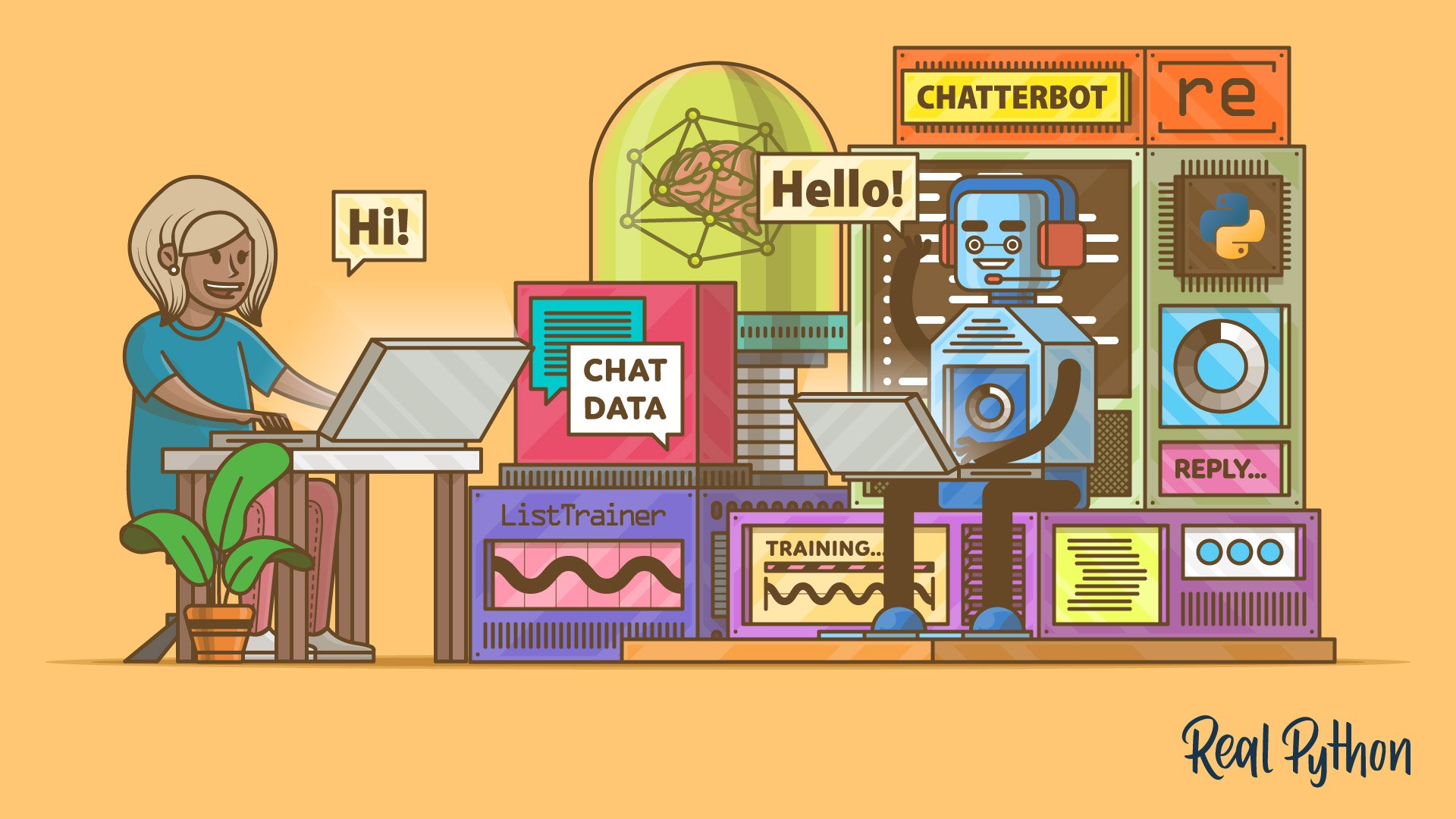
ChatterBot is a Python library designed to generate automated responses to user input. It combines text processing, machine learning techniques, and a local database to create a self-learning chatbot. Under the hood, it uses a graph structure and similarity matching, particularly Levenshtein distance, to find the most appropriate reply from its training data. The library stores conversation pairs in a SQLite database by default, which allows it to learn from interactions over time. ChatterBot can be trained with lists, CSV files, or JSON data, making it flexible for different use cases. A significant revival in 2025 introduced support for modern Python versions, new training formats, and experimental LLM integration via Ollama, bringing it up to date with current NLP trends.
2. How do I create a basic ChatterBot chatbot?
Creating a minimal chatbot with ChatterBot requires just a few lines of Python code. You instantiate a ChatBot object, then run a loop to collect user input. For each input, you call .get_response(), which returns the best matching reply based on your training data. Here's a simplified example:
- Install ChatterBot using pip.
- Import the
ChatBotclass. - Create a chatbot instance, optionally giving it a name.
- Use a
while Trueloop to repeatedly ask for user input. - Call
chatbot.get_response(input_text)and print the result.
With no training, the bot will only echo simple greetings. To make it conversational, you need to train it with relevant data, as described in the next question.
3. How can I train ChatterBot with custom data?
Training ChatterBot with custom data is straightforward using the ListTrainer class. You provide a list of conversation pairs—strings that alternate between a statement and a response. For example, ["Hi", "Hello!", "How are you?", "I'm good, thanks."]. The trainer processes these pairs and stores them in the internal database (SQLite by default). For more realistic data, you can use WhatsApp exports. Clean the chat logs using regular expressions to remove timestamps, emojis, and system messages. Then split the conversation into alternating lines to form statement-response pairs. ChatterBot also supports CSV and JSON trainers, which are especially useful for larger datasets. Training is additive—the bot continues learning from new data without forgetting previous conversations.
4. How does ChatterBot select which response to give?
ChatterBot uses a combination of text processing and similarity matching to select responses. The default logic adapter employs Levenshtein distance (edit distance) to compare the user's input against all stored statements in the database. It then picks the response from the most similar statement-response pair. The library also considers frequency—if a particular statement appears multiple times with different responses, it may favor the most common one. Additionally, ChatterBot supports a voting mechanism among multiple logic adapters. Each adapter returns a confidence score, and the response with the highest confidence is chosen. This allows integration of different strategies, such as custom algorithms or LLM-based adapters (see next question).
5. How can I integrate a local LLM with Ollama?
Starting from the 2025 revival, ChatterBot offers experimental support for local LLMs through the OllamaLogicAdapter. To use it, you need to have Ollama installed and running on your system, with a model like Llama or Mistral pulled. Then, when configuring your chatbot, include OllamaLogicAdapter in the list of logic adapters. This adapter will query the local LLM for a response and assign a confidence score. You can combine it with other adapters (e.g., Levenshtein matching) using voting. The LLM adapter enriches replies with contextual knowledge beyond what was explicitly trained. However, since it relies on an external service, response times may be slower. This integration bridges traditional pattern matching with modern generative AI, giving your chatbot a significant boost in conversational quality.
6. What's new in the 2025 ChatterBot revival?
After a long period of inactivity, ChatterBot was revived in early 2025 with several important updates. The library now supports modern Python versions (3.9 and above). It introduces new training formats: CSV and JSON trainers, making it easier to load large datasets. The NLP backend has been improved with spaCy integration, providing better tokenization and similarity metrics. Most notably, experimental LLM support via Ollama allows the bot to leverage powerful language models for more intelligent replies. The revival also fixed many bugs and updated dependencies. This means developers can now build more robust and feature-rich chatbots without needing to create everything from scratch. The project is actively maintained again, promising further enhancements.
7. How does the chatbot improve over time?
ChatterBot is designed to be self-learning. Every time a user interacts with the bot, the conversation pair (input statement and the response that was given) is optionally stored in the database. By default, the bot will add new statements and responses it hasn't seen before, expanding its internal graph structure. Over many interactions, the bot accumulates more data, which increases the chances of finding a good match for new inputs. The similarity matching (Levenshtein distance) also becomes more effective as the database grows. Additionally, if you continue training with fresh custom data, the bot adapts to new topics. This continuous learning process makes the chatbot gradually more knowledgeable and accurate, transforming it from a simple echo bot into a competent conversational partner.