Cloudflare Revolutionizes LLM Deployment with Decoupled Inference Infrastructure
Cloudflare has unveiled a novel infrastructure design aimed at running large language models (LLMs) more efficiently across its global edge network. By intelligently splitting the computational workload—handling input processing and output generation on separate, optimized systems—Cloudflare addresses the high hardware costs and data volume challenges inherent in LLM inference. This approach promises faster responses and better resource utilization for AI applications deployed at the edge.
What is Cloudflare's new infrastructure for running LLMs?
Cloudflare's latest infrastructure is purpose-built for serving large language models (LLMs) at the network edge. Instead of running the entire model on a single, monolithic system, Cloudflare decouples the inference pipeline into two distinct phases: input processing and output generation. Each phase runs on its own specialized hardware, optimized for the unique demands of that task. This separation ensures that the high memory and compute requirements of LLMs are handled more efficiently, reducing latency and operational costs. For more on the performance benefits, see the performance section.
Why did Cloudflare decide to separate input processing and output generation?
The decision stems from the inherent asymmetry of LLM inference. Input processing primarily involves tokenizing and encoding incoming text, which is computationally light but data-intensive due to large prompt sizes. Output generation, on the other hand, is computationally heavy—it requires autoregressive computation to produce tokens one by one. Running both phases on the same hardware leads to inefficient resource usage: one phase bottlenecks while the other waits. By splitting them, Cloudflare can allocate the right hardware for each workload, avoiding the premium cost of using high-end GPUs for simple encoding tasks, and maximizing throughput for generation. This design also scales independently, allowing Cloudflare to add capacity for input or output as demand shifts.
How does this infrastructure improve performance for LLMs?
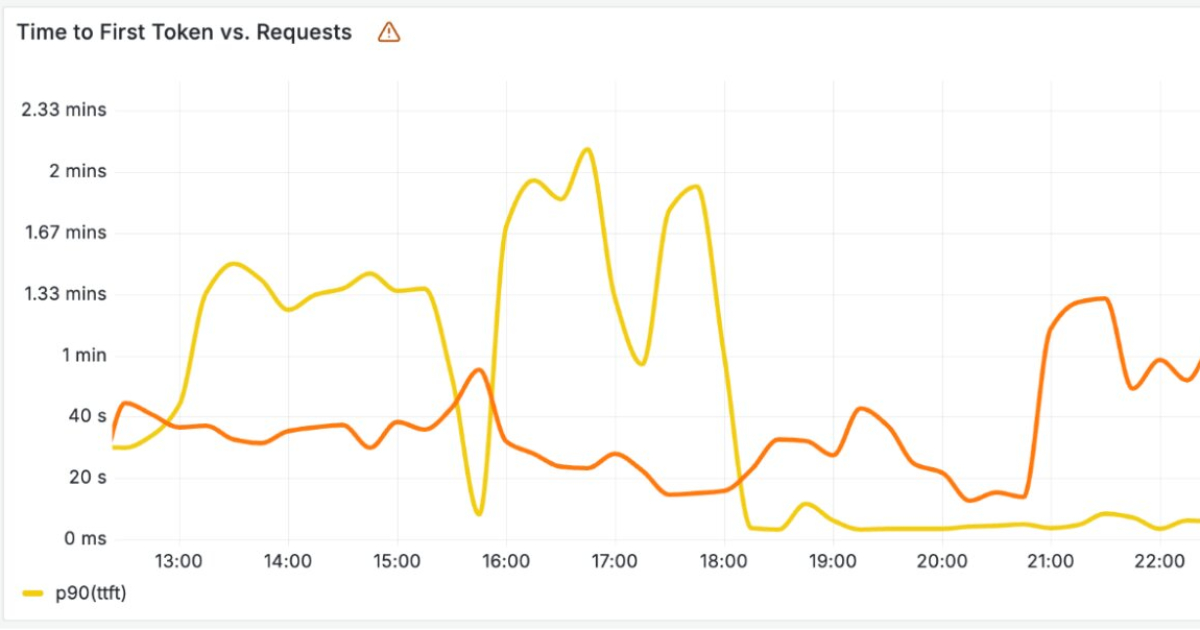
Performance gains come from hardware specialization and load balancing. Input processing nodes use high-bandwidth memory and fast networking to absorb large volumes of prompts without delay. Output generation nodes pack dense compute power—such as NVIDIA GPUs or custom ASICs—to deliver fast token generation. By isolating these phases, Cloudflare can pipeline requests: while one request is generating output, another can be processing input on separate hardware. This reduces overall response time and improves concurrent request handling. Additionally, because each model component runs on purpose-optimized infrastructure, total datacenter efficiency increases, leading to lower power consumption per inference. For technical specifics, see input processing details and output generation details.
Which types of AI models can benefit from this approach?
While Cloudflare's new infrastructure is designed for large language models (LLMs)—like GPT-style architectures, BERT, and other transformer-based models—it can benefit any model with a clear separation between a lightweight encoding phase and a heavy decoding phase. Models with long input contexts (e.g., document analysis) especially profit because the input system handles large payloads efficiently. The approach also supports models that mix text with other modalities, as long as the encoding and decoding can be partitioned. Smaller models may not need such optimization, but for models exceeding tens of billions of parameters, this decoupling can significantly reduce inference costs.
What are the technical details of the input processing system?
The input processing layer focuses on high-throughput, low-latency data handling. It uses servers with large RAM pools and fast storage to batch incoming prompts, tokenize them, and create internal representations. Cloudflare employs custom software to manage memory pools efficiently, reusing buffers across requests. The system can also cache frequent input tokens or embeddings to avoid redundant computation. Because input processing does not require heavy floating-point operations, it avoids high-end GPUs, instead using CPUs with optimized networking and NVMe drives. This reduces cost while still handling millions of concurrent input streams. The processed data is then passed to the output generation layer via a high-speed internal fabric.
/presentations/game-vr-flat-screens/en/smallimage/thumbnail-1775637585504.jpg)
What are the technical details of the output generation system?
The output generation layer is optimized for autoregressive text generation. It uses clusters of GPUs (e.g., A100, H100) or other accelerators, arranged for parallel inference with techniques like tensor parallelism. Cloudflare implements efficient block-sparse attention and model sharding to reduce memory contention. The system supports batching of multiple output streams to increase GPU utilization. Additionally, it uses dynamic scheduling to prioritize interactive requests while still maintaining high throughput for batch jobs. The generation layer also includes a specialized output buffer and streaming logic that sends tokens to the client as soon as they are generated, minimizing perceived latency. This design ensures that the expensive compute resources are fully utilized without being blocked by input processing delays.
How does Cloudflare's global network play a role?
Cloudflare's edge network spans hundreds of data centers worldwide. By deploying the decoupled infrastructure at these edge nodes, Cloudflare brings LLM inference closer to users, drastically reducing network latency. Input processing can happen at the node nearest the user, while output generation can be distributed across multiple nodes for load balancing. This global presence also enables geo-distributed caching of model weights and partial results. Furthermore, the network handles traffic routing and failover seamlessly: if one node is busy, another nearby node can take over. The result is a resilient, low-latency service that can scale to global demand without central bottlenecks.
What does this mean for developers using Cloudflare?
For developers, Cloudflare's new infrastructure simplifies LLM deployment. They can use familiar cloud APIs or integrate via Workers to call inference endpoints without managing hardware. The separation of input and output is abstracted away; developers send a prompt and receive a streamed response. Cost savings are passed on, as Cloudflare charges only for actual usage of each phase. Developers also benefit from automatic scaling: as traffic spikes, Cloudflare allocates more input or output capacity without manual intervention. Finally, because the edge network handles routing, applications achieve sub-second response times globally. This makes building AI-powered features—like chatbots, summarizers, or classification—more accessible and efficient on Cloudflare's platform.