10 Key Insights on Ransomware Trends in Q1 2026
The first quarter of 2026 marked a pivotal moment in the ransomware landscape. While the overall volume of attacks remained alarmingly high, the ecosystem underwent a dramatic structural shift—from fragmentation toward consolidation. This listicle unpacks the most critical developments, from dominant players to emerging threats, based on data from over 70 active data leak sites (DLS) that recorded 2,122 new victims. Whether you're a security professional or a business leader, these insights will help you understand where the threat is headed and how to prepare.
1. Ransomware Volumes Stabilize at Historic Levels
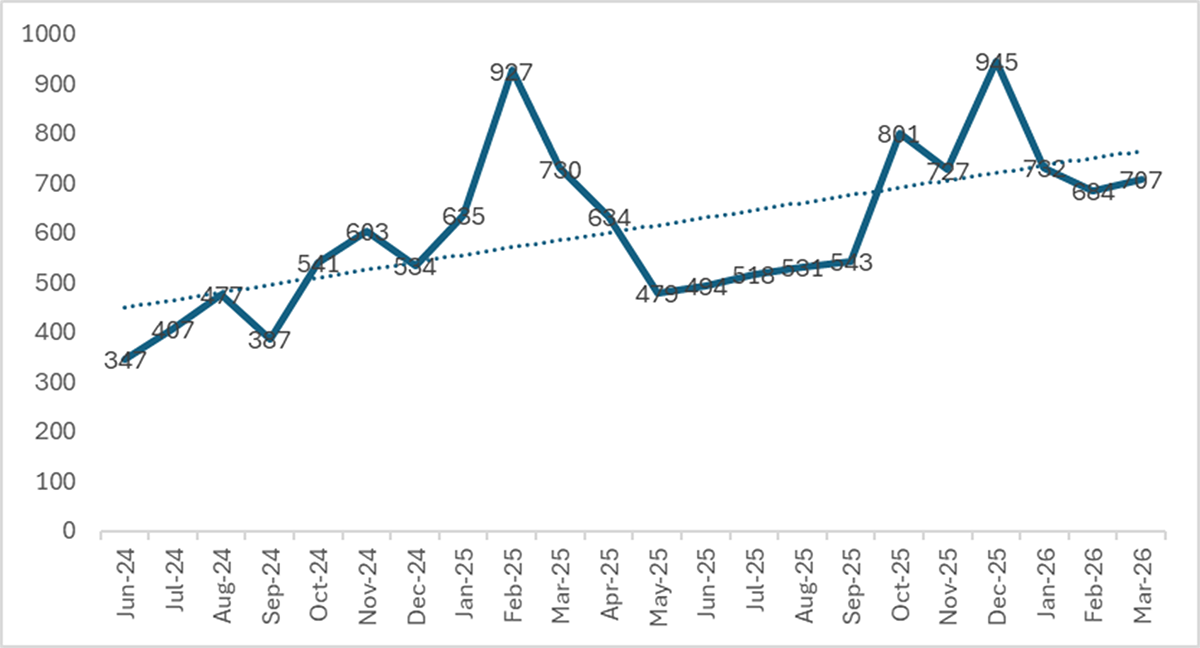
The first quarter of 2026 saw 2,122 victims posted on data leak sites, making it the second-highest Q1 on record—only 12% below the all-time Q4 2025 peak of 2,416. This number is particularly striking when compared to Q1 2024, which recorded just 977 victims—a 117% increase. Monthly volumes were remarkably stable, averaging 707 victims per month (732 in January, 684 in February, 706 in March). The long-term growth trend has clearly plateaued at an elevated baseline, but there's no sign of a meaningful decline.
2. The Ecosystem Shifts from Fragmentation to Consolidation
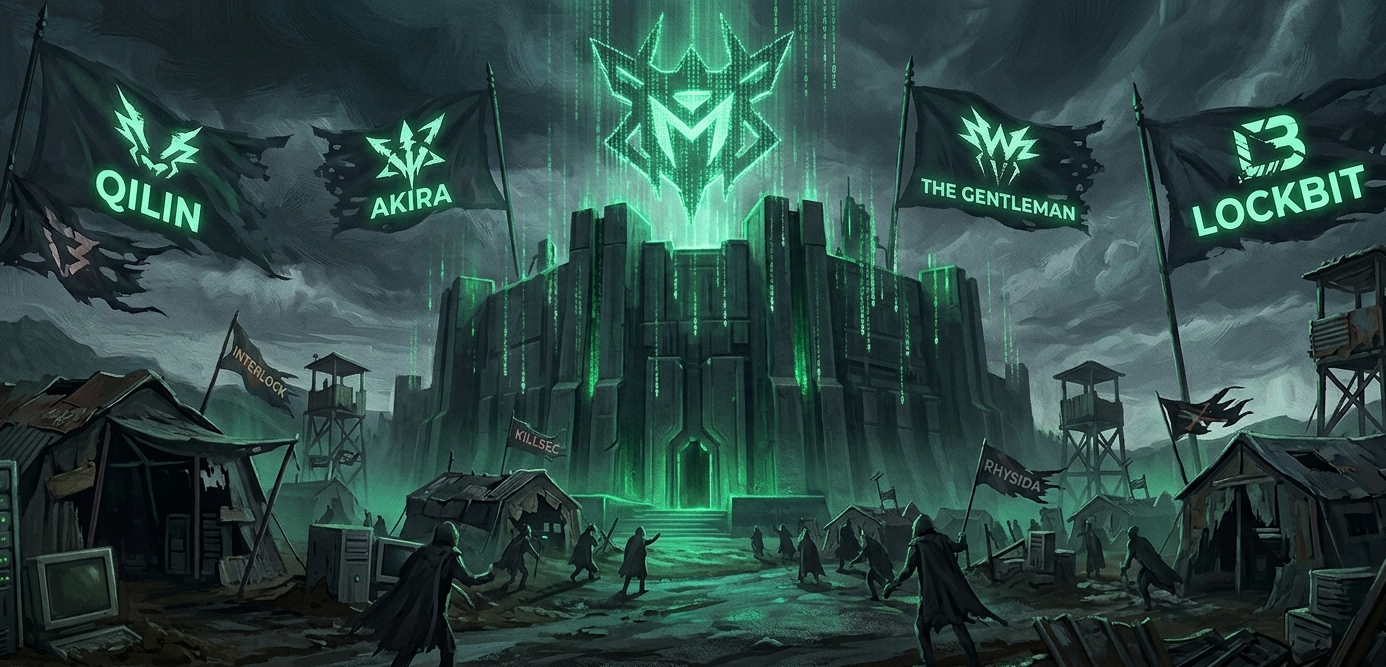
After two years of steady fragmentation—where the number of active groups grew from 51 in Q1 2024 to 85 in Q3 2025—the ransomware landscape suddenly reversed course. In Q1 2026, the top 10 groups accounted for 71.1% of all DLS-posted victims, the highest concentration since early 2024. The total number of active groups shrank from 85 to 71. Fourteen groups that were active in Q4 2025 vanished, while 21 new names emerged. This consolidation signals a maturing ecosystem where only the most effective and well-resourced operations survive.
3. Qilin Remains the Dominant Force for a Third Quarter
Qilin continued its reign as the most prolific ransomware operation, posting 338 victims in Q1 2026—maintaining the top spot for three consecutive quarters. Their sustained dominance reflects a sophisticated operational model, likely involving aggressive recruitment of affiliates and refined extortion tactics. While their victim count dipped slightly from the previous quarter, Qilin still outpaces competitors by a wide margin, accounting for roughly 16% of all posted victims.
4. The Gentlemen Emerge as the Quarter’s Breakout Group
One of the most surprising developments was the rapid rise of The Gentlemen, which rocketed from 40 victims in Q4 2025 to 166 in Q1 2026—a 315% increase—securing third place globally. This newcomer likely leveraged a combination of zero-day exploits, aggressive social engineering, and a rebranding strategy that appealed to disenfranchised affiliates from other groups. Their sudden prominence underscores how quickly new players can disrupt the status quo.
5. LockBit 5.0 Makes a Resurgence
LockBit, once the dominant force in ransomware, staged a notable comeback with its 5.0 variant. The group posted 163 victims in Q1 2026, climbing to fourth place. This resurgence follows a period of decline after law enforcement takedowns in 2024. The return suggests that LockBit has rebuilt its infrastructure, possibly with enhanced encryption and data exfiltration capabilities. Their recovery serves as a reminder that no threat actor is permanently neutralized.
6. Year-over-Year Comparisons Can Be Misleading
A simple year-over-year comparison shows a 7.1% decline from Q1 2025 (2,285 victims) to Q1 2026 (2,122 victims). However, this drop is almost entirely due to a single event: Cl0p’s mass exploitation of Cleo software in early 2025, which contributed an extra 390 victims. If Cl0p is excluded from both periods, the numbers tell a different story—1,894 victims in Q1 2025 versus 1,995 in Q1 2026, a 5.3% increase. The underlying growth trend remains intact, even as artificial spikes fade.
7. Data Leak Sites Are Overflowing with New Victims
Despite the slight quarterly dip, the number of victims posted on data leak sites remains at historically high levels. The 2,122 victims represent a sustained operating rate of approximately 707 per month. This consistency indicates that ransomware operators have optimized their extortion pipelines, likely using automated tools to post victim data more efficiently. The sheer volume means defenders face an ongoing deluge of threats, with no respite in sight.
8. Disappearance of Existing Groups Creates Opportunity for Newcomers
Fourteen groups that were active in Q4 2025 completely disappeared from the DLS landscape in Q1 2026. These disappearances could be due to law enforcement actions, internal disputes, or voluntary retirement. Meanwhile, 21 new groups appeared, indicating churn within the ecosystem. This turnover creates both risk and opportunity: established groups that vanish leave a vacuum that newcomers rapidly fill, often with more aggressive tactics.
9. The Top 10 Now Dominate Like It’s 2024 Again
The concentration of victims among the top 10 groups surged from 57% in Q3 2025 to 71.1% in Q1 2026—a level not seen since early 2024 when the ecosystem was much smaller. This reversal suggests that smaller groups struggle to compete for affiliates or face higher operational risks. The big players are consolidating their market share, which may lead to more sophisticated and targeted attacks as they invest in better tools and intelligence.
10. Outlook: Consolidation May Reshape Defense Strategies
As ransomware operations consolidate, defenders must adapt. A smaller number of dominant groups means threat intelligence can be more focused—but those groups are likely more capable and harder to disrupt. The rise of groups like The Gentlemen and the return of LockBit 5.0 show that the landscape remains dynamic. Organizations should prioritize fundamental defenses such as multi-factor authentication, robust backup strategies, and threat hunting that specifically targets these top-tier actors. The Q1 2026 data is a clear signal: the ransomware threat is not going away, but it is evolving in ways that demand a more strategic response.
In conclusion, Q1 2026 paints a picture of a ransomware ecosystem that is both stable in volume and turbulent in structure. The consolidation around a handful of powerful groups, the emergence of aggressive newcomers, and the persistent high victim counts all point to a threat that remains dangerous and adaptive. Security teams should monitor these trends closely and adjust their defenses accordingly—because the next quarter’s breakout group could be just around the corner.