Reviving the Google Home Mini: An $85 Upgrade Board Brings Local Processing and Modern Features
Breathing New Life into an Obsolete Speaker
The Google Home Mini, launched in 2017, was once the company's most accessible smart speaker. Millions were sold and given away as promotional items. While many still function for basic tasks, the device has reached the end of its software support cycle. It lacks customizability and local processing power, and even its successor, the Nest Mini, has been discontinued. As rumors swirl about new Gemini-powered speakers, one innovative solution offers a way to bring the first-generation Home Mini up to 2026 standards for just $85: the MiciMike PCB upgrade board.
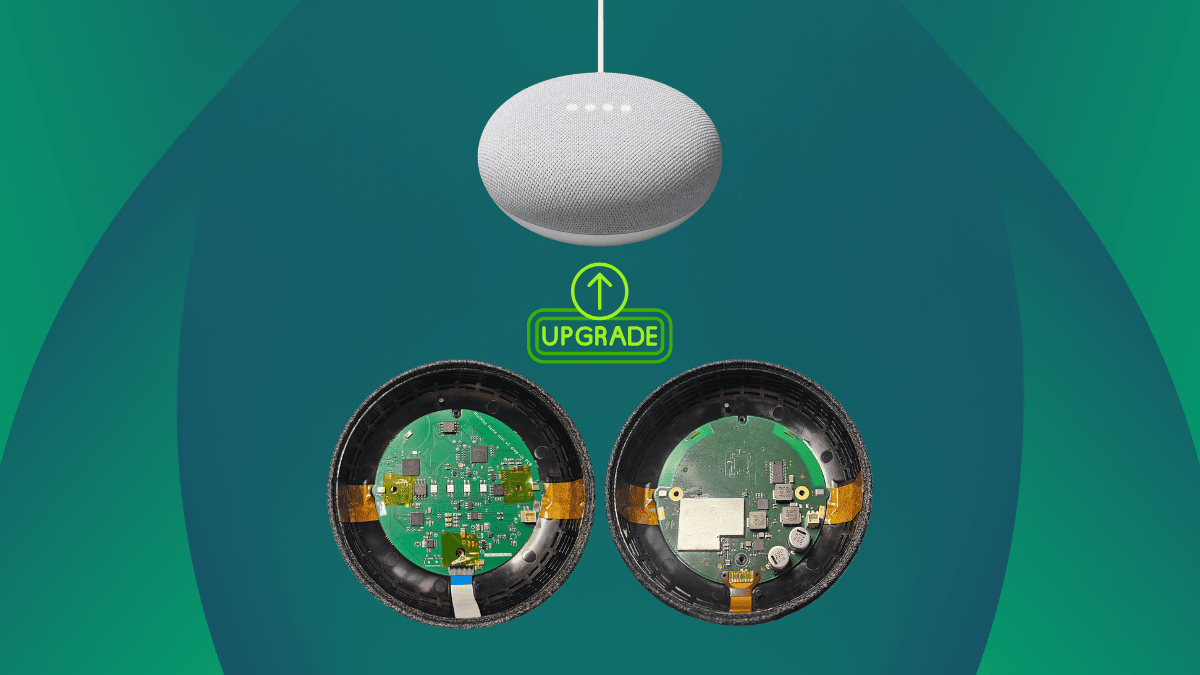
What’s Inside the MiciMike PCB
This compact board replaces the Home Mini’s original logic board while retaining its speaker, enclosure, and mute button. At its heart are two specialized chips:
- Espressif ESP32-S3 — a dual-core Xtensa LX7 processor running at 240 MHz, with 8 MB of PSRAM and 16 MB of flash memory. It handles Wi-Fi, Bluetooth, and wake-word detection via microWakeWord, ensuring all voice data stays on your device.
- XMOS XU316 — a dedicated audio processor with 4 MB of its own flash. It cleans up noise and echo from the two onboard MEMS microphones before any data reaches the main chip.
The original Home Mini speaker can be reconnected using the included FPC cable, preserving the device’s audio output.
Key Specifications at a Glance
| Main Processor | ESP32-S3 (dual-core Xtensa LX7, 240 MHz), 8 MB PSRAM, 16 MB flash |
| Audio Processor | XMOS XU316, 4 MB flash |
| Microphones | 2× MEMS (placed in original locations) |
| LEDs | 4× SK6812 RGB |
| PCB | 4-layer, 72 × 70 mm, HASL lead-free |
| Connectivity | Wi-Fi 802.11 b/g/n (2.4 GHz), Bluetooth 5.0 LE |
| License | CERN-OHL-S (open hardware) |
Software and Integration
The board comes with ESPHome preinstalled, making it instantly compatible with Home Assistant’s Assist, Music Assistant, and Snapcast. This enables local voice control, music streaming, and multi-room audio without any cloud dependency. Should you desire more advanced conversational abilities, you can optionally integrate a cloud-based LLM as the conversation agent — but the system works perfectly fine without it.

Hardware Design Details
The MiciMike upgrade retains key features of the original Home Mini. The physical mute button still makes a hardware-level disconnection, ensuring privacy. Four SK6812 RGB LEDs sit in the same positions as the original status indicators, providing visual feedback. The board’s 4-layer design ensures signal integrity while keeping the footprint compact (72 × 70 mm).
Why This Matters
Instead of discarding a perfectly functional speaker, this upgrade gives it local processing, privacy-focused voice recognition, and seamless integration with open-source smart home platforms. For $85, you breathe new life into a classic device while avoiding the waste of electronic deadweight. Whether you’re a Home Assistant enthusiast or simply want a smarter, more private speaker, this PCB is a compelling option.